
Customized Rail Transfer Cart Helps Heavy Duty Material Transfer in Railway Maintenance
Recently, a 5 tons battery powered rail transfer cart, designed to address the pain points of heavy duty material transfer in railway line maintenance scenarios, was officially launched.
This effectively solves industry problems such as low efficiency and operational limitations in the traditional railway construction process for transporting materials like sleepers and gravel.
Based on the needs of railway maintenance operations, Newld has added a cantilever crane and anti-tipping supports to the traditional rail transfer cart, providing a heavy-duty handling solution integrating transportation and auxiliary loading/unloading for railway construction sites.
Basic Structure
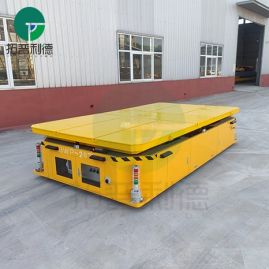
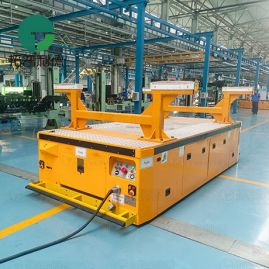
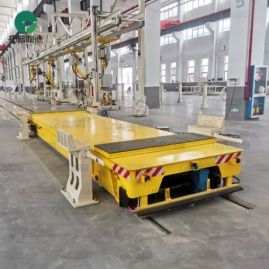
This rail transfer cart measures 6600×2000×700mm and adopts a box-girder frame structure. The front and rear of the cart are equipped with standard baffles, guardrails, and operator seating. The transfer cart body is equipped with a dedicated cantilever crane, and anti-tipping supports are added to the four corners, adapting to the integrated lifting and transfer operations required on site.
Control System
This transfer cart supports both wireless remote control and wired handle operation modes. It features a power display screen, audible and visual warning lights, and a physical emergency stop button. The wheels are made of high-wear-resistant cast steel, and it comes with a large-capacity battery and a portable charger, allowing for operation across the entire railway line on a single charge.
Compared to ordinary railway transport equipment, this equipment is specifically customized for railway maintenance scenarios, comprehensively considering the customer's application needs for heavy-load transportation, on-site loading and unloading, safety protection, and operational flexibility.
Battery power reduces operational limitations imposed by fixed power supplies, the cantilever crane improves on-site loading and unloading efficiency, and the anti-tipping bracket enhances operational stability.
It effectively solves problems such as low material transport efficiency, heavy manual handling burden, and limited equipment operation in railway maintenance, making railway maintenance work more environmentally friendly, efficient, and practical.